
Planning an outdoor grill island in Naples means accounting for intense sun, steady breezes, salty air, and strict hurricane rules, so you’ll choose materials and layouts that last and stay safe. Think stainless or marine polymers, smart drainage, shaded seating that keeps guests engaged with the cook, and corrosion‑proof utilities that save energy and maintenance. I’ll outline practical layouts, appliance choices, and permit tips to help you decide the right scope and budget—starting with site planning Outdoor Grill Island Installation.
Site Planning: Assess Sun, Wind, Salt Exposure, Drainage, and Hurricane Requirements for Naples, FL
Because Naples sits on the Gulf Coast, you’ll want to site your grill island with sun, prevailing winds, salt spray, drainage, and local hurricane rules in mind: orient it for optimal sun orientation to reduce glare and heat, align layout to prevailing wind patterns, select finishes with strong salt resistance, integrate smart drainage solutions, and plan for hurricane preparedness to minimize damage and support sustainable longevity.
Choose Hurricane‑Resistant Materials for Cabinets, Countertops, and Appliances
When you pick materials for cabinets, countertops, and appliances, prioritize proven corrosion resistance, impact strength, and ease of repair so your grill island stands up to Naples’ hurricanes and salty air.
Choose stainless steel grades, marine-grade polymer cabinets, and quartz or porcelain counters for hurricane-resistant materials and long-term cabinet durability.
Opt for replaceable panels, powder-coated finishes, and sustainable, low-VOC options for easy maintenance.
Pick the Right Grill Type and Fuel for Florida Living (Gas, Charcoal, Infrared, Hybrid)
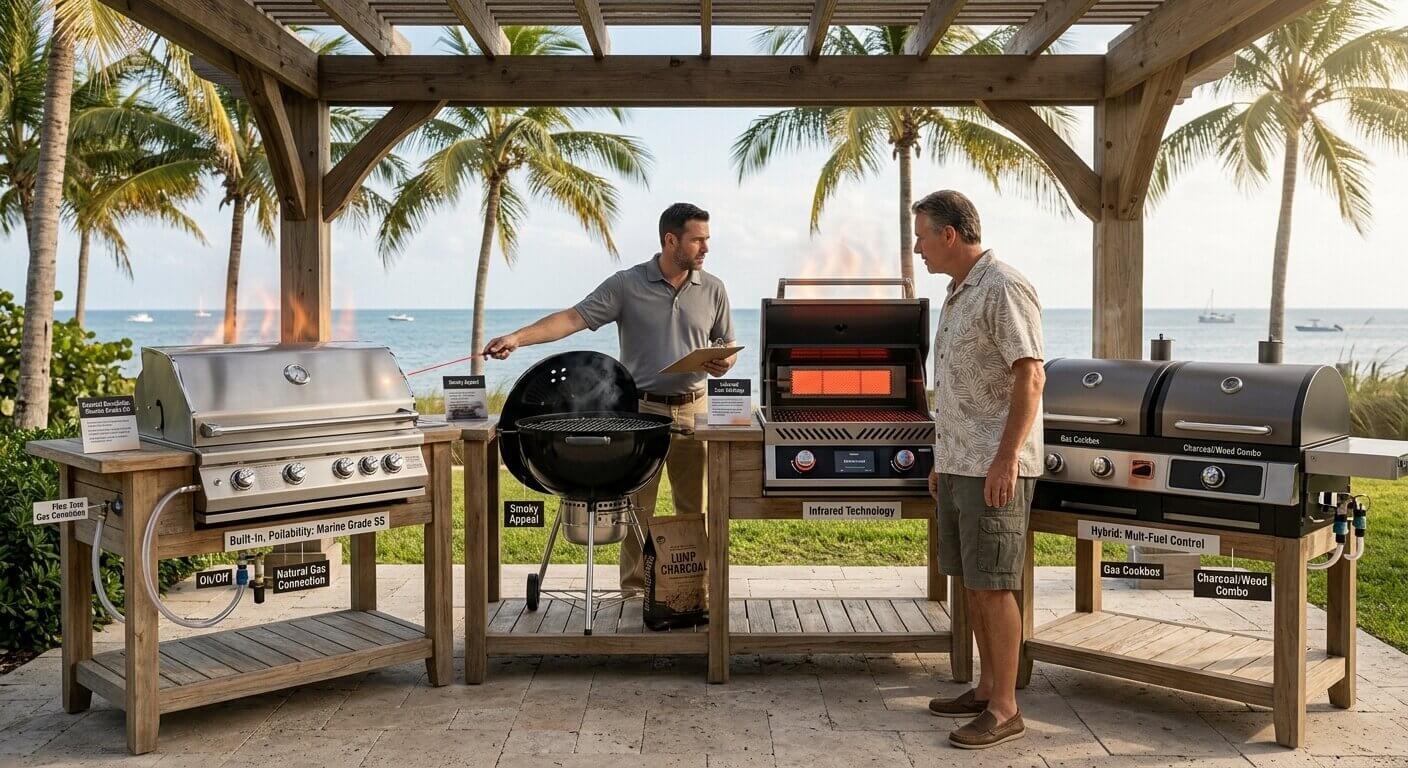
For Florida’s year‑round cooking, you’ll want a grill that balances convenience, flavor, and long‑term environmental impact.
Gas grills give quick, controllable heat and lower emissions for frequent use. Charcoal delivers that smoky flavor but needs more upkeep and creates more waste.
Infrared or hybrid units offer fast searing and flexible fuel choices to cut standby energy and fuel use.
Consider how often you cook, your tolerance for cleanup, and whether you want to reduce propane or charcoal consumption when choosing.
Gas Grill Pros
If you want reliable, quick heat with minimal fuss, gas grills are a smart choice for Florida living: they start up instantly, maintain steady temperatures in humid coastal conditions, and produce fewer particulates than charcoal—making them easier to use regularly and cleaner for nearby landscaping and neighbors.
You’ll enjoy excellent grill efficiency, precise temperature control, integrated safety features, and outdoor aesthetics that suit sustainable, low-maintenance island designs.
Charcoal Flavor Tradeoffs
Although charcoal gives you that sought-after smoky crust and deeper sear, you’ll want to weigh flavor against practicality in Florida’s heat and humidity.
Choose lump charcoal or sustainably sourced briquettes to balance smoky richness with reduced ash.
You’ll adapt grilling techniques to manage longer light times, wind, and moisture, and plan for ash disposal and safe storage to protect coastal landscapes.
Infrared And Hybrid
Someone choosing between infrared and hybrid grills in Florida will want to match fast, intense heat to the state’s climate realities and your maintenance preferences.
You’ll appreciate infrared benefits: rapid searing, lower flare-ups, and energy efficiency that suits humid, salt-air settings.
A hybrid gives hybrid versatility—switch fuels for flavor or convenience—while letting you prioritize sustainable fuel choices and simpler upkeep for coastal outdoor islands.
Layouts That Keep the Cook Social: Island, Peninsula, Bar Seating, and Traffic Flow
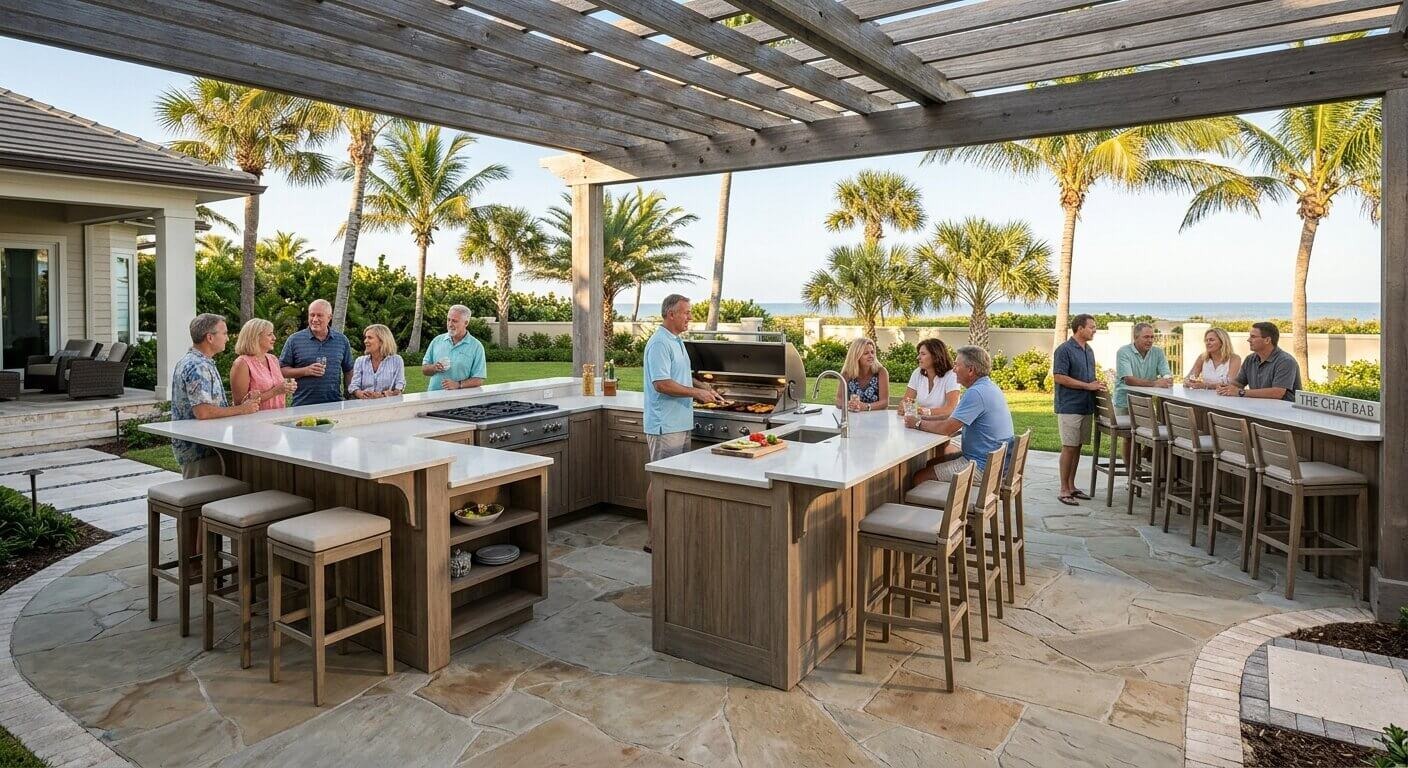
Place an island with face-to-face seating so you can cook and chat without turning your back on guests, using durable, low-maintenance materials suited for Florida’s climate.
Choose a peninsula layout to open one side to the yard and encourage easy interaction while keeping prep and service zones compact and efficient.
Add bar seating and plan clear circulation paths so people can move around the grill safely and linger without blocking work areas.
Island With Face-To-Face Seating
When you design an island with face-to-face seating, focus on sightlines and comfortable spacing so the person cooking can chat without turning away from the grill.
Center durable, low-maintenance materials that suit Naples, FL, humidity, prioritize seating comfort with ergonomic stools, and align design aesthetics with native stone and reclaimed wood.
Keep circulation clear, add shade, and use energy-efficient lighting for sustainable evenings.
Peninsula For Open Interaction
Because a peninsula tucks the cook into the flow rather than isolating them, it’s ideal for conversations, drink service, and passing plates without interrupting grilling, especially in humid Naples, where durable, low-maintenance materials matter.
You’ll plan seating arrangements that face the cook for interactive cooking, allow clear traffic lanes, and choose rot-resistant countertops and sealed cabinetry to minimize upkeep while keeping social connection.
Bar Seating And Flow
A peninsula sets the tone for sociable grilling, but bar seating refines how you shape interaction and movement around your island or counter.
You’ll plan bar design to preserve clear traffic aisles, orient stools for sightlines to the cook, and choose durable, low-maintenance materials suited to Naples’ climate.
Prioritize seating comfort and sustainable finishes so guests linger without obstructing prep zones.
Shade and Weather Protection: Pergolas, Louvered Roofs, and Operable Covers
If you want to cook outdoors year-round without sacrificing comfort, integrate shade and weather protection that’s tailored to your site, materials, and local climate.
Choose pergola materials with corrosion‑resistant finishes, pair a louvered design for adjustable sun control, and add operable features for rain protection.
Thoughtful shade structures boost weather resilience and outdoor aesthetics while minimizing maintenance and energy use.
Corrosion‑Proof Utilities: Gas, Electrical, Plumbing, and Outdoor‑Rated Lighting
When you plan utilities for an outdoor grill island, prioritize corrosion‑resistant materials and installation methods so gas lines, electrical components, plumbing, and lighting stay safe and low‑maintenance in wet, salty, or humid conditions.
Use marine‑grade stainless fittings, PEX or copper with dielectric unions, sealed GFCI circuits, and outdoor‑rated LED fixtures.
Schedule inspections, apply sacrificial anodes, and plan for minimal outdoor maintenance to extend service life.
Storage, Refrigeration, and Appliance Placement for Humid, Salty Conditions
Because salty, humid air accelerates corrosion and mold growth, you’ll want to choose storage, refrigeration, and appliance locations that minimize exposure and maximize serviceability.
Place refrigerators and cabinets under covered, elevated counters with stainless or marine‑grade finishes, prioritize ventilation solutions and active moisture management, locate electricals for easy access, and plan removable panels for cleaning and sustainable long‑term maintenance.
Budget Tiers and Installation Timelines: DIY, Partial Pro, and Full Custom Builds
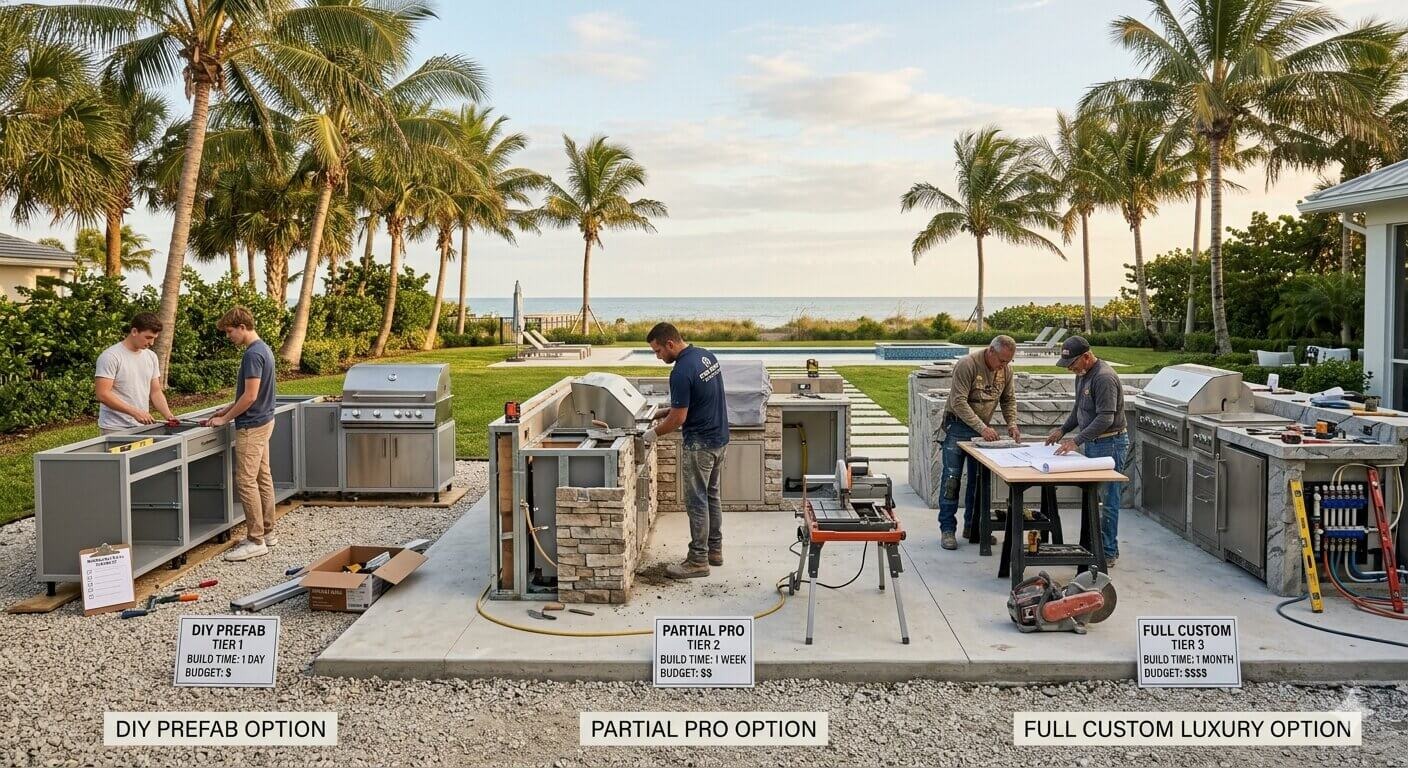
Though budget and timeline will shape nearly every decision, you can broadly categorize outdoor grill island projects into three practical tiers—DIY, partial pro, and full custom—each with distinct cost ranges, material choices, and expected lead times.
You’ll weigh DIY Costs, Pro Pricing, Custom Features, and smart Budget Planning.
- DIY: low cost, longer personal time
- Partial pro: mixed labor, efficient
- Full custom: premium materials, longer lead
- Sustainable choices cut lifecycle cost
Hiring Local Pros: Contractor Questions, Permits, and Hurricane‑Code Inspections
If you’re hiring local pros for a grill island, come prepared with specific questions about licensing, insurance, and past projects so you can vet competence and avoid costly surprises.
Ask about contractor qualifications, hurricane-code experience, material sustainability, and timelines.
Confirm local permit processes, inspection schedules, and who handles submissions.
Get written estimates, warranties, and a clear payment schedule before work begins.
Conclusion
You’ve planned with Naples’ sun, salt, winds, and storm rules in mind, so choose hurricane‑rated materials, corrosion‑proof utilities, and energy‑efficient grills that last. Favor social layouts like peninsulas with bar seating, include shaded, operable covers and proper drainage, and place refrigeration and storage to avoid humidity damage. Work with local pros for permits and inspections, and opt for durable, sustainable finishes—this keeps your outdoor kitchen beautiful, functional, and resilient for years.